


Moisture, Humidity, and What Homeowners Should Know
By Burke & Crew Paintwrights
Serving Gloucester and the surrounding Cape Ann communities for over 10 years.
Homes in coastal areas face a different set of conditions than inland properties. Moisture, humidity, salt air, and older construction all influence how building materials perform over time—including flooring.
If you’re considering epoxy flooring for a coastal home, this guide explains how epoxy performs in coastal environments, what factors matter most, and why professional evaluation is especially important near the ocean.
What Makes Coastal Homes Different?
Coastal homes are routinely exposed to:
- Higher ambient humidity
- Moisture migration through concrete slabs
- Salt air that accelerates material wear
- Temperature swings that affect building materials
These conditions don’t automatically rule out epoxy flooring—but they do require careful planning and correct installation methods.
How Epoxy Flooring Handles Moisture
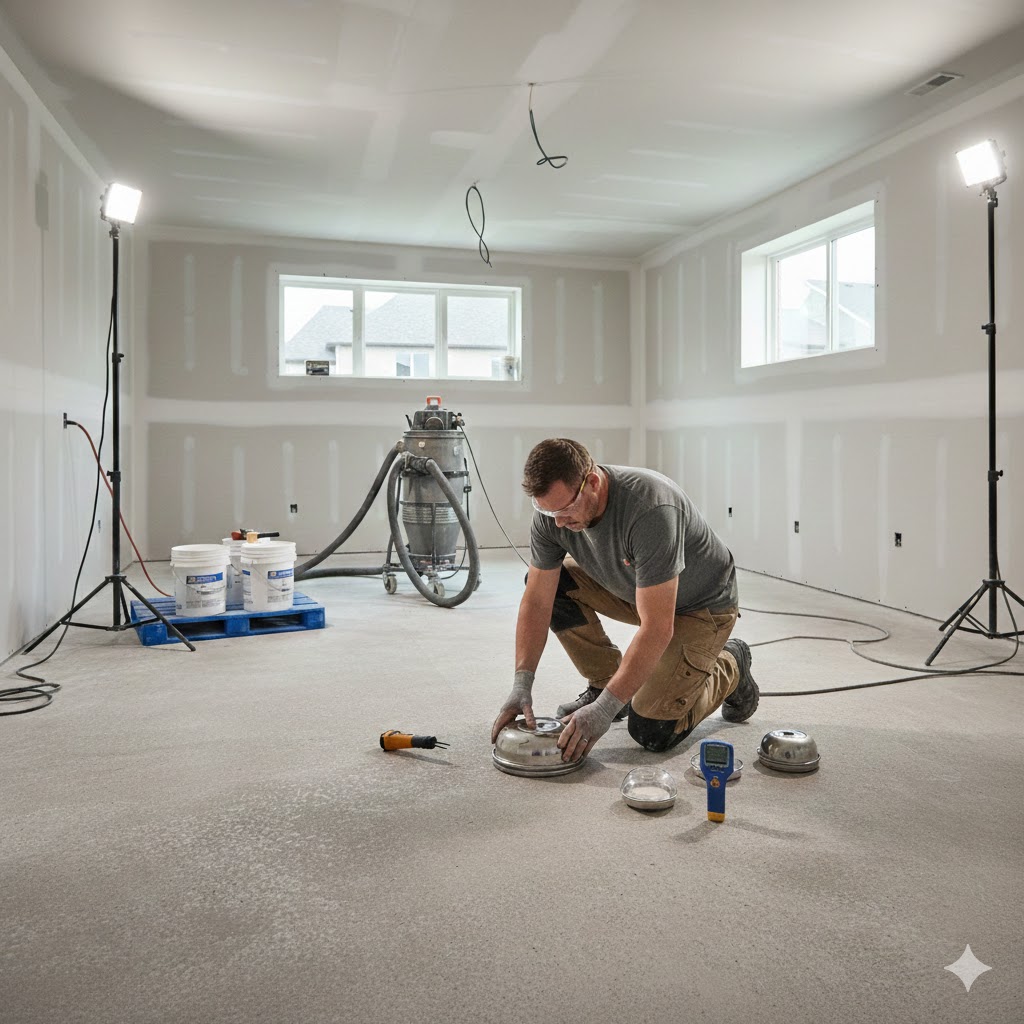
Epoxy flooring is often chosen for its moisture resistance, especially in basements and lower-level spaces. When properly installed, epoxy forms a seamless, non-porous surface that helps protect the underlying concrete.
In coastal homes, professionals focus on:
- Evaluating moisture vapor transmission through concrete
- Identifying signs of hydrostatic pressure
- Selecting epoxy systems designed for moisture-prone environments
Moisture management is not optional in coastal installations—it’s foundational.
Basements and Lower Levels in Coastal Homes
Basements in coastal regions like Cape Ann often experience:
- Elevated moisture levels
- Older concrete slabs
- Variations in drainage conditions
Epoxy flooring can perform very well in these spaces when the slab is properly evaluated and prepared. Without that step, even high-quality epoxy systems can struggle.
Professional installers assess whether additional moisture mitigation or surface preparation is required before moving forward.

Living Spaces Near the Coast
Epoxy flooring is increasingly used in:
- Finished basements
- Home gyms and recreation rooms
- Laundry rooms and utility spaces
- Select kitchens and bathrooms
In coastal homes, these spaces benefit from epoxy’s easy maintenance and resistance to moisture—but finish selection and surface texture matter.
Professionals adjust:
- Slip resistance
- Finish sheen
- System thickness
based on how the space will be used day to day.
Older Coastal Homes Require Extra Evaluation
Many homes in Gloucester and surrounding Cape Ann communities feature:
- Older foundations
- Patched or previously coated concrete
- Irregular slab conditions
These factors don’t prevent epoxy flooring, but they do require individual evaluation. Two coastal homes a mile apart can have very different flooring needs.
This is where local experience becomes especially valuable.
Why Professional Installation Matters in Coastal Environments
Coastal conditions magnify small installation mistakes. Issues like inadequate surface prep or overlooked moisture concerns are more likely to surface over time near the ocean.
Professional installation helps ensure:
- Moisture is properly evaluated and addressed
- The correct epoxy system is selected
- Surface preparation meets manufacturer requirements
- The finished floor performs as intended long-term
This approach protects both appearance and durability.
Frequently Asked Questions
Yes, when properly installed. Coastal environments require additional evaluation, but epoxy flooring can perform very well in many coastal residential spaces.
Humidity can affect installation and performance if not accounted for. Professionals adjust preparation and product selection accordingly.
Often, yes. Basements are one of the most common areas for epoxy flooring in coastal homes, provided moisture conditions are addressed.
Epoxy flooring systems are durable, but proper system selection and installation are key in salt-air environments