

Durability, Wear, and What Homeowners Should Expect
By Burke & Crew Paintwrights
Serving Gloucester and the surrounding Cape Ann communities for over 10 years.
Epoxy flooring is often chosen for its durability, but many homeowners understandably ask the same question before moving forward: how long does epoxy flooring actually last in a home?
The answer depends on several factors, including where the floor is installed, how it’s used, and—most importantly—how it’s prepared and installed. This guide explains what affects the lifespan of residential epoxy flooring and what homeowners should realistically expect.
What “Long-Lasting” Means for Epoxy Flooring
Epoxy flooring is not a temporary surface coating. When properly installed, it becomes a bonded flooring system designed to withstand daily use over many years.
In residential settings, epoxy flooring is commonly used in:
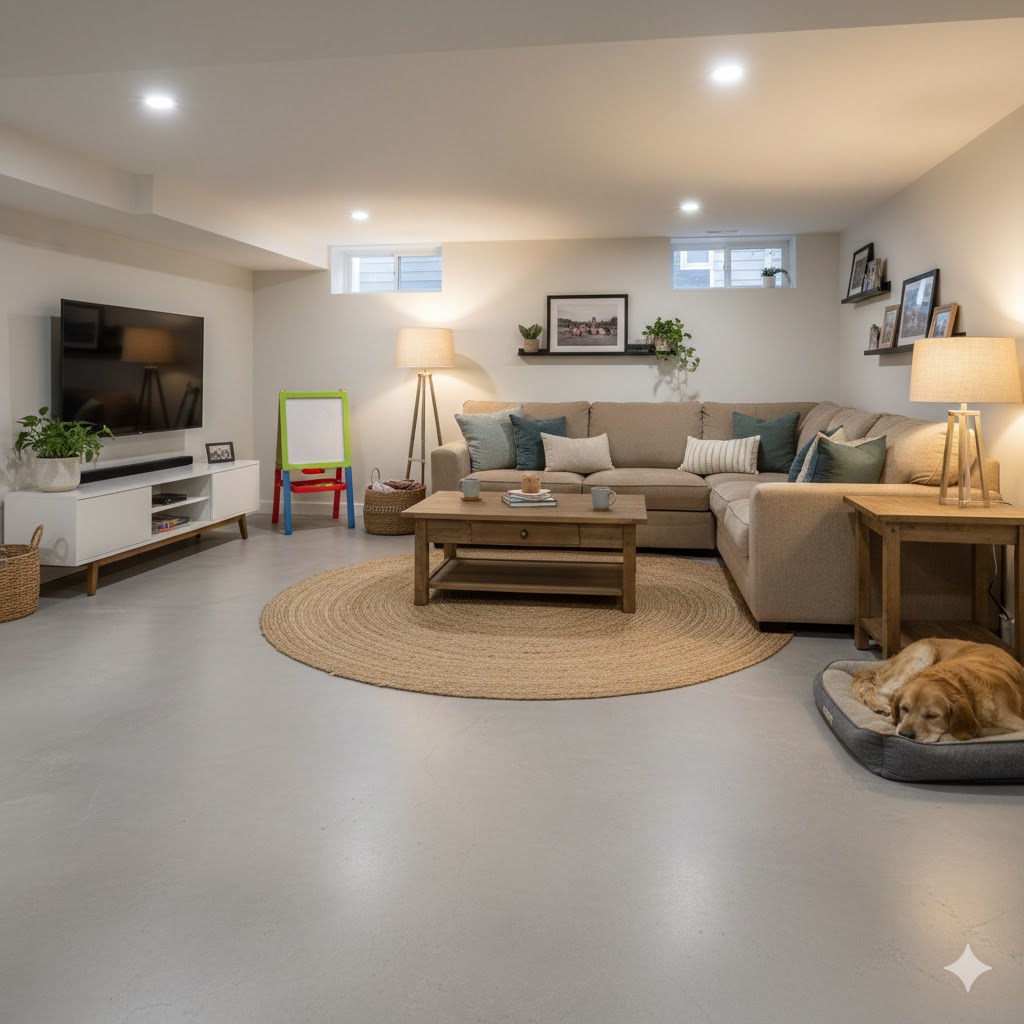
- Basements and lower-level living spaces
- Home gyms and recreation rooms
- Laundry rooms and utility areas
- Garages and select living spaces
In these environments, professionally installed epoxy floors are valued for their resistance to wear, moisture, and staining.
Factors That Affect How Long Epoxy Flooring Lasts
Not all epoxy floors perform the same. Longevity depends on a combination of conditions.
Surface Preparation
The condition of the substrate beneath the epoxy has the greatest impact on lifespan. Floors installed over properly prepared concrete tend to last significantly longer than those applied over poorly prepared or unsuitable surfaces.
Room Use and Traffic
A basement sitting area and a home gym experience very different demands. Heavy equipment, frequent movement, and abrasive debris can all affect wear over time.
Moisture Conditions
In coastal homes and basements, moisture plays a major role. Proper moisture evaluation and system selection help prevent peeling or premature failure.
Installation Quality
Even high-quality epoxy products can fail if applied incorrectly. Professional installation ensures correct mixing, application thickness, curing conditions, and finishing.
Typical Lifespan of Residential Epoxy Flooring
While every home is different, professionally installed epoxy flooring in residential environments often lasts many years with proper care.
Homeowners typically experience:
- Long-term durability in basements and living spaces
- Excellent performance in utility areas and gyms
- Minimal maintenance compared to many traditional flooring options
Periodic cleaning and reasonable care help maintain appearance and performance over time.


Signs of Wear—and What They Mean
Over time, epoxy flooring may show signs of normal wear depending on use. These can include:
- Minor surface scuffing
- Loss of sheen in high-traffic areas
- Cosmetic wear in entry points
These signs do not necessarily indicate failure. In many cases, floors remain structurally sound and functional long after cosmetic changes appear.
Why Professional Installation Makes the Biggest Difference
Many epoxy flooring failures attributed to “product issues” are actually installation issues. Problems such as peeling, bubbling, or cracking are most often traced back to:
- Inadequate surface preparation
- Unaddressed moisture
- Incorrect product selection
- Improper curing conditions
Professional installation focuses on preventing these issues before they start.
Frequently Asked Questions
When properly installed and maintained, residential epoxy flooring can last many years, depending on use and conditions.
Cracking or peeling is usually caused by substrate issues or poor installation, not normal wear.
Yes. Epoxy flooring is commonly used in active residential spaces due to its durability and ease of maintenance.
Routine cleaning and avoiding unnecessary abrasion help preserve appearance and extend the life of the floor.