

By Burke & Crew Paintwrights
Serving Gloucester and the surrounding Cape Ann communities for over 10 years.
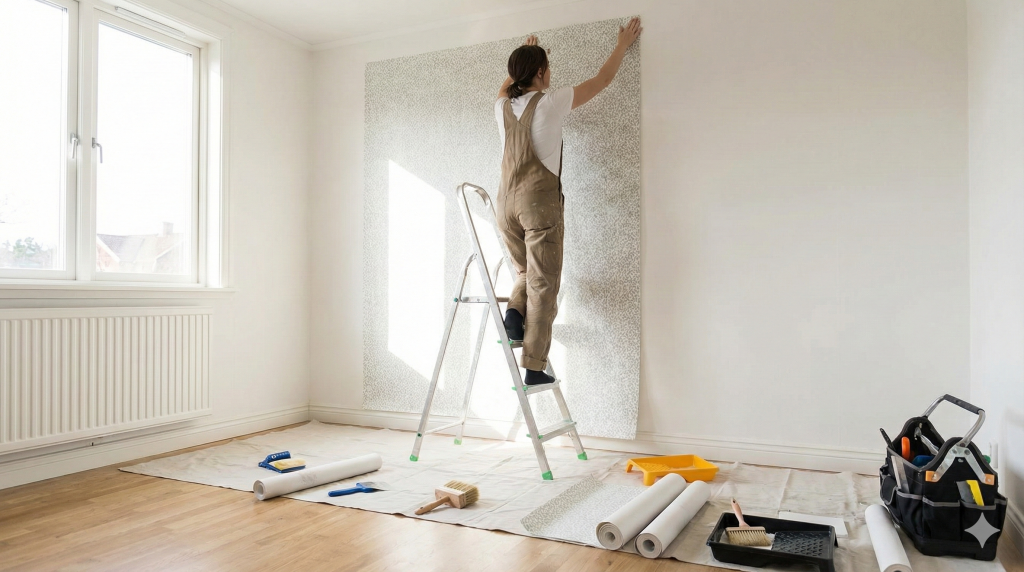
It’s completely understandable to look at wallpaper installation and think, “I can probably do this myself.” After all, there are countless videos, guides, and tutorials that make the process appear straightforward.
But wallpaper installation is one of those projects where the gap between knowing what to do and doing it well is much wider than most homeowners expect.
Before you decide to hang wallpaper yourself, it’s worth understanding the realities of the process, the most common pitfalls, and why professional installers learn this craft the way they do.
Why Wallpaper Installation Isn’t Like Other DIY Projects
Wallpaper is not forgiving.
Unlike paint, mistakes can’t be blended, touched up, or easily corrected once the material is on the wall. Seams, pattern drift, bubbles, and misalignment are immediately visible—and often permanent.
What many tutorials don’t convey is that wallpaper installation is:
- Highly tactile
- Dependent on visual judgment
- Influenced by subtle wall conditions
- Sensitive to timing, pressure, and material behavior
These are things that are learned by doing the work repeatedly, not by reading instructions.
Why Step-by-Step Instructions Only Go So Far
There are plenty of places to find detailed wallpaper installation instructions:
- Manufacturer installation guides
- Trade demonstrations
- Long-form instructional videos from experienced installers
These resources can be helpful for understanding what the process looks like. What they can’t provide is the real-time judgment that comes from experience.
Wallpaper installation is traditionally taught in person, by someone who already knows how to do it—much like an apprenticeship. Corrections happen as the work is happening, not after the wall is finished.
Written instructions can’t tell you:
- When a wall is almost flat enough—but not quite
- When adhesive feels right—or slightly off
- When a pattern looks aligned now but will drift later
- When a mistake should be corrected immediately instead of pushed through
Without that experience, the only alternative is trial and error.
The Reality of Trial and Error
Trial and error is a valid way to learn any craft—but wallpaper is an expensive material to learn on.
Most homeowners who attempt wallpaper installation themselves encounter:
- Wasted wallpaper from miscuts or pattern misalignment
- Seams that don’t fully disappear
- Bubbles or lifting edges that appear days or weeks later
- Corners, windows, and ceilings that reveal mistakes
Unless you happen to be Da Vinci and Michelangelo rolled into one, there will likely be quite a bit of trial—and a noticeable amount of error—before consistent results appear.
Why Older Homes Make DIY Wallpaper Harder
In older Gloucester and Cape Ann homes, wallpaper installation becomes even more challenging.
Common conditions include:
- Plaster walls
- Out-of-square rooms
- Previous repairs or layered finishes
- Subtle surface irregularities
These aren’t problems you can see clearly until wallpaper goes on the wall—and by then, it’s often too late to correct them easily.
Professional installers learn how to anticipate and address these conditions before installation begins.
The Hidden Cost of “Saving Money”
Many homeowners attempt DIY wallpaper installation to save on labor costs.
What often gets overlooked is:
- The cost of wasted wallpaper
- The cost of fixing damaged walls
- The cost of removing failed installations
- The cost of hiring a professional after something goes wrong
In many cases, the total cost of a DIY attempt followed by professional correction exceeds the cost of professional installation from the start.
When DIY Might Be Reasonable
To be fair, there are situations where DIY wallpaper installation may be reasonable:
- Very small accent areas
- Peel-and-stick products (with limitations)
- New, flat drywall in low-visibility spaces
Even then, expectations should be realistic, and results may vary.
When Hiring a Professional Makes Sense
If the goal is a finished space that looks clean, aligned, and intentional—not just “done”—professional wallpaper installation is often the better choice.
This is especially true when:
- Wallpaper is expensive or custom
- Patterns are complex or large-scale
- Walls are older or imperfect
- The room is highly visible
Professional installation isn’t about convenience—it’s about risk management and long-term results.
Frequently Asked Questions
In some cases, yes—but it depends on the level of texture and the type of wallpaper being used. Heavily textured walls often require smoothing or skim coating before wallpaper installation to ensure proper adhesion and a clean finished look.
Yes. Professional wallpaper removal helps protect the underlying wall surface and reduces the risk of damage, especially in older homes with plaster or previously repaired walls.
If you’re using a Lifetime plan, the charges will be taken only once, and you’ll be able to use the product from the subscription and receive all the updates without any additional payments or charges taken.
Note: *Prices exclude VAT/Taxes
Wallpaper quantities are typically determined by measuring the walls and accounting for pattern repeats and waste. Many homeowners choose to consult with a professional before purchasing to ensure accurate ordering.
Wallpaper quantities are typically determined by measuring the walls and accounting for pattern repeats and waste. Many homeowners choose to consult with a professional before purchasing to ensure accurate ordering.
Installation time varies based on room size, wall condition, and the complexity of the wallpaper. Smaller rooms may take a day, while larger or more detailed installations can take longer.
Burke & Crew Paintwrights serves Gloucester and the surrounding Cape Ann communities. Know More