

Is it Rot or Just Weathering? How to Evaluate Cedar Shingle Failure
The “Pick Test” and Other Professional Ways to Evaluate Your Siding
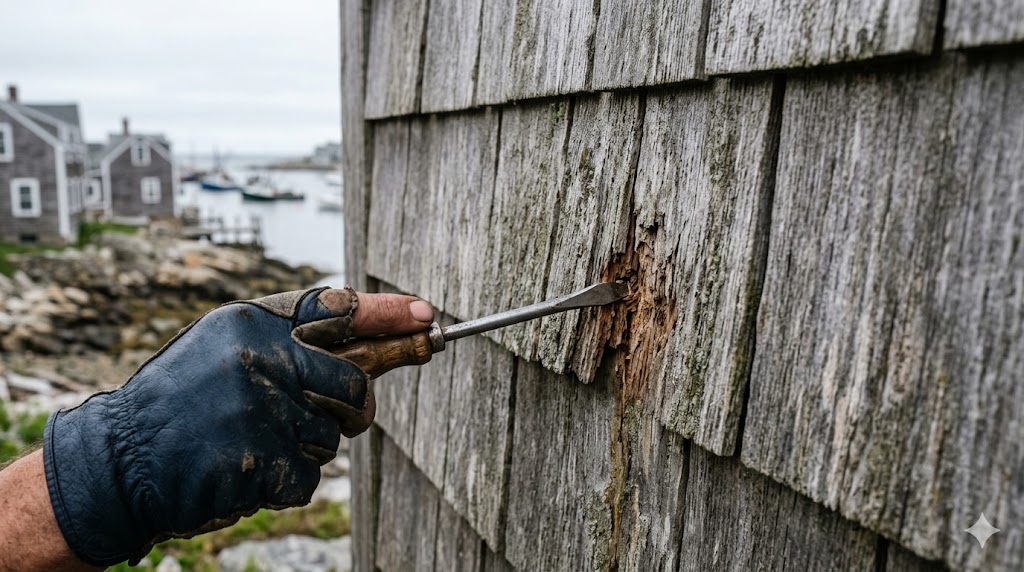
Color is the least reliable indicator of wood health; structural integrity is what matters. To identify true failure, you must perform a “Pick Test” in high-moisture zones to check for spongy wood fibers. If the wood is firm under the gray surface, the shingles are likely candidates for restoration rather than replacement.
How do I perform the “Pick Test” on my siding?
Press a screwdriver gently into the wood in moisture-prone areas, such as under window sills or near the ground. If the tool sinks into a soft, “punky” texture, the wood fibers have failed structurally. If the wood is firm and provides resistance, the shingles are simply weathered and can be restored through stabilization and sealing.
Expert Context for Homeowners:
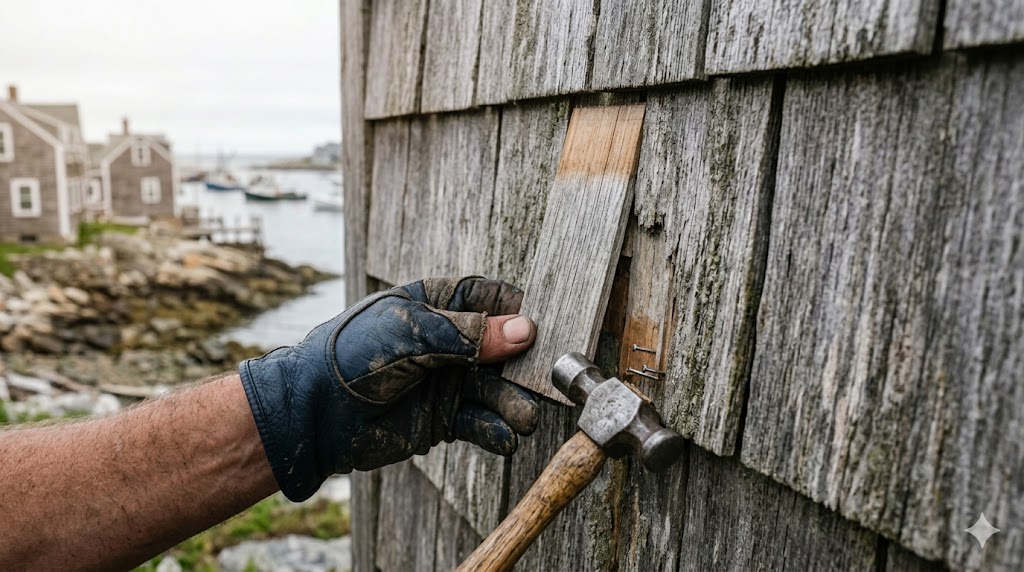
In many cases, “failure” is localized to specific sections of a Cape Ann home rather than being systemic. On exposed coastal properties in Bass Rocks — where nor’easters drive salt spray into every corner — damage tends to concentrate on north-facing walls and low-to-grade exposures. You don’t need a total replacement for a localized problem. By performing “surgical” rot repair and a stabilization wash, we save the 50-year-old high-density wood that is far superior to modern “new growth” replacements.
Why does “black” siding not always mean you have a mold problem?
Dark discoloration on cedar is often a mix of biological growth (mold/algae) and “tannin bleed” — a natural chemical reaction where the wood’s internal oils react to moisture. While mold can be neutralized with a specialized soft wash, tannin bleed requires a pH-balancing treatment to restore the uniform silver look. A professional evaluation identifies the difference, ensuring the correct chemistry is used.
In Pigeon Cove, where heavy seasonal fog and salt spray create persistently damp conditions, we routinely see tannin bleed misidentified as mold. The distinction matters because the wrong treatment — bleach on tannin staining, for example — can worsen the discoloration rather than resolve it.
📌 Related:
Is it Wood Rot or Just Surface Decay?
Why Does Salt Air Rot Cedar Shingles Faster on Cape Ann?
Ready to Know the Truth About Your Siding?
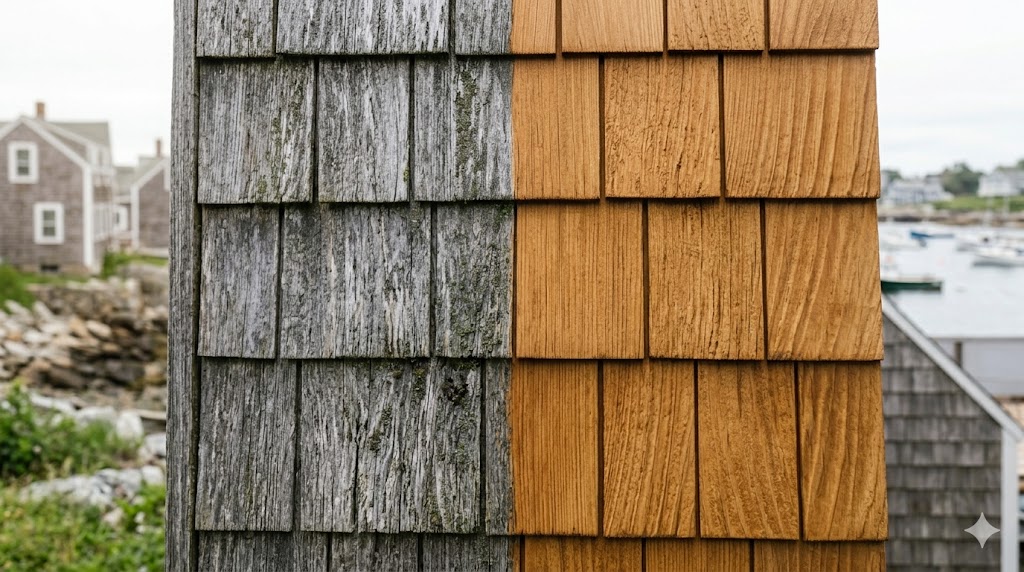
Stop guessing and start protecting your home’s character. We provide honest, technical evaluations for cedar shingle homes throughout Cape Ann, helping you save what’s solid and restore what’s tired.
Request a Consultation