

What Do I Need to Know When Painting a 300-Year-Old Home?
Essential Steps for Preserving First Period and Antique Structures on Cape Ann

Painting a 300-year-old home in Cape Ann requires a fundamentally different approach than modern construction. These structures rely on breathable materials to manage moisture — not synthetic coatings.
Painting a 300-year-old home is fundamentally different from painting modern construction because antique wood must remain “breathable” to prevent structural decay. Modern acrylic paints can trap moisture and cause rot from the inside out.
How Is Painting an Antique Home Different from a Modern One?
Modern homes are built with vapor barriers and controlled ventilation systems. Historic homes rely on the wood itself to regulate moisture naturally.
Applying modern, high-build acrylic coatings can trap moisture inside the structure — leading to paint failure, damp conditions, and long-term deterioration. Breathable coatings allow vapor to escape, which is essential for preserving old-growth timber. :contentReference[oaicite:0]{index=0}
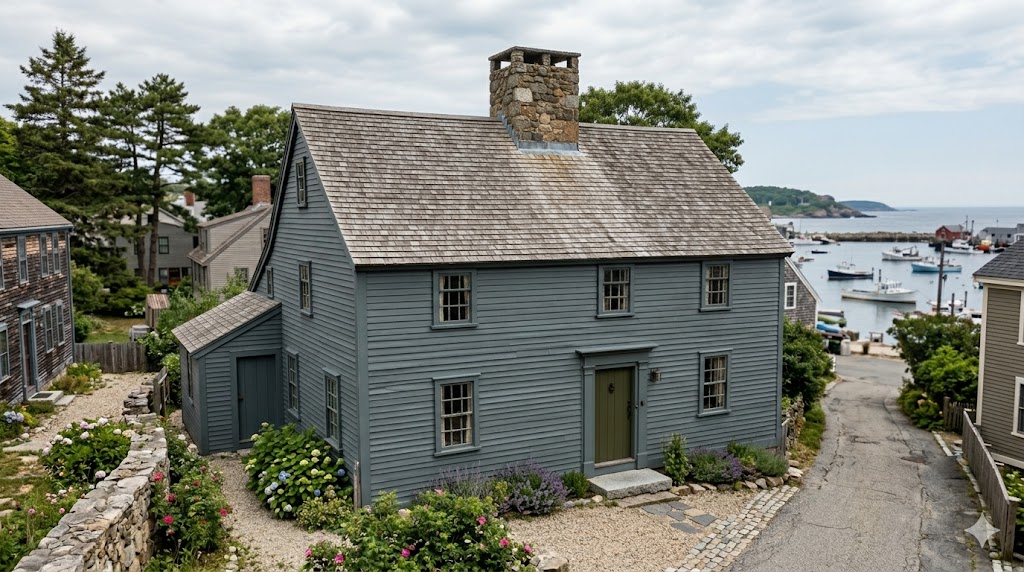
In neighborhoods like West Gloucester and Annisquam, peeling or “alligatoring” paint is often a sign that moisture is trapped beneath non-breathable coatings.
What Are the Risks of Standard Prep Work on Historic Wood?
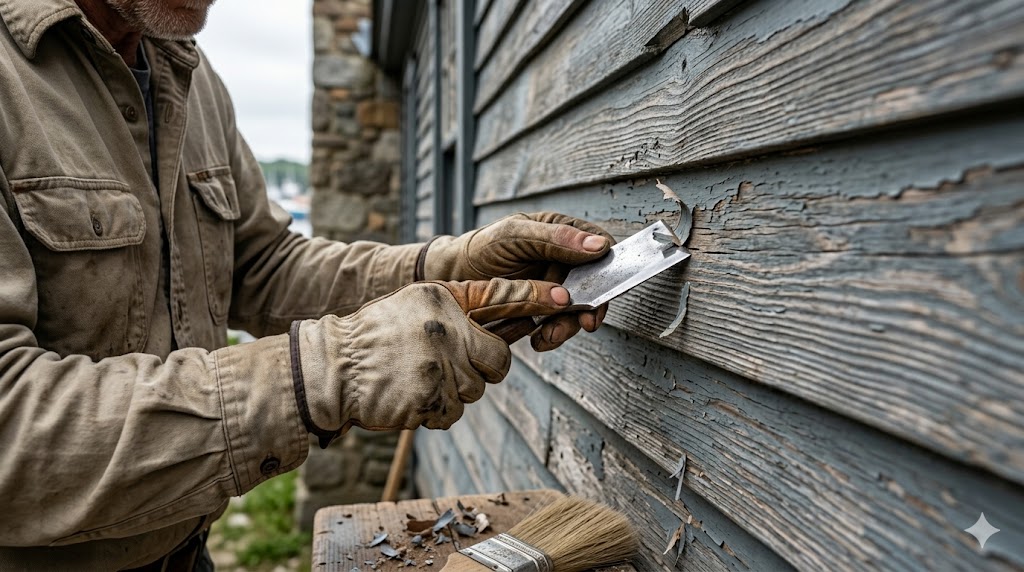
Aggressive sanding and pressure washing can permanently damage antique materials.
- Surface Damage: Removes hand-planed texture unique to historic siding
- Fiber Weakening: Older wood is more brittle and prone to tearing
- Character Loss: Over-preparation erases historical authenticity
Instead, preservation-focused work relies on careful hand scraping and controlled cleaning methods that respect the substrate.
Our Professional Standard for 300-Year-Old Structures
- Vapor-Permeance Testing: Selecting coatings that allow moisture to escape
- Historical Color Matching: Using mineral pigments aligned with original palettes
- Lead-Safe Conservation: Protecting both occupants and historic materials
Traditional breathable coatings — such as limewash or mineral-based paints — work with the building rather than sealing it. :contentReference[oaicite:1]{index=1}
Related Reading:
Is Lead Paint Abatement Safe for 18th-Century Woodwork?
Is it Wood Rot or Just Surface Decay?
Protect Your Historic Home the Right Way
If you own a First Period or early Colonial home, proper preservation requires the right materials and methods — not modern shortcuts.
Learn About Historic Home Preservation